Introduction
Transformers play a vital role in modern power systems by enabling efficient voltage conversion across transmission and distribution networks. Among the most widely used types are power transformers and distribution transformers, each designed for specific applications within the grid. Understanding the differences between them helps utilities, engineers, and project developers select the right equipment to improve system reliability, optimize energy efficiency, and support long-term operational performance.
What Are Power Transformers and Distribution Transformers?
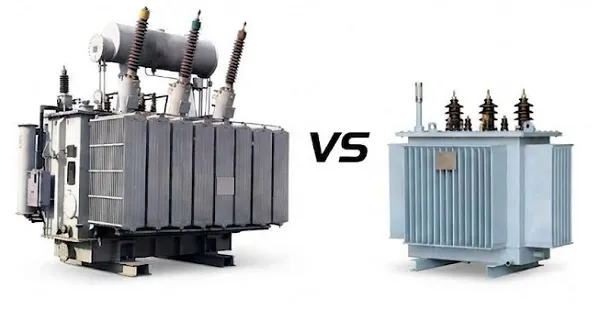
Understanding the basic definition and function of each transformer type is essential before comparing their differences.


Key Differences Between Power Transformer and Distribution Transformer
The table below summarizes the key differences between power transformers and distribution transformers.
|
Comparison Factor |
Power Transformer |
Distribution Transformer |
|
Primary Application |
Power transmission systems |
Power distribution networks |
|
Voltage Level |
High and extra-high voltage |
Medium and low voltage |
|
Capacity Range |
Large power ratings |
Smaller power ratings |
|
Installation Location |
Transmission substations and power plants |
Local distribution substations |
|
Load Characteristics |
Operates close to full load |
Operates under varying load conditions |
|
Design Priority |
Maximum efficiency at full load |
High efficiency across changing loads |
|
Typical Users |
Utilities, transmission operators, power generation facilities |
Industrial, commercial, and residential power users |
How to Choose Between a Power Transformer and a Distribution Transformer
Selecting the right transformer depends on the specific requirements of the power system and application.
Consider Your Position in the Power Network
The first factor is determining where the transformer will be installed within the electrical system. Transmission and generation projects generally require power transformers, while local distribution networks rely on distribution transformers to deliver electricity to end users.
Evaluate Voltage and Capacity Requirements
Voltage levels and power ratings play a major role in transformer selection. Large-scale transmission projects often require high-capacity power transformers, while distribution networks typically need transformers designed for lower voltage applications and smaller loads.
Assess Load Characteristics
Understanding load behavior is essential for selecting the most efficient transformer. Systems that operate continuously at high loads may benefit from power transformers, while applications with fluctuating demand often require distribution transformers optimized for variable operating conditions.
Consider Future Expansion Plans
Power demand can increase over time as facilities expand or populations grow. Choosing a transformer with adequate capacity and flexibility for future development can help avoid costly upgrades and improve long-term system reliability.
Benefits of Choosing the Right Transformer Solution
Selecting the appropriate transformer for a project can provide significant technical and economic advantages.
- Improved energy efficiency – Proper transformer selection helps reduce energy losses throughout the electrical system.
- Enhanced system reliability – Equipment designed for the intended application delivers more stable and dependable performance.
- Reduced operating costs – Higher efficiency and lower losses contribute to long-term cost savings.
- Better voltage regulation – Appropriate transformer sizing helps maintain stable voltage levels across the network.
- Increased equipment lifespan – Operating a transformer within its designed conditions reduces stress and extends service life.
- Greater operational safety – Properly selected transformers support safer and more reliable power system operation.
- Easier system expansion – Selecting the right transformer capacity allows future load growth to be accommodated more effectively.
- Lower maintenance requirements – High-quality transformers designed for specific applications typically require less maintenance over their operating life.
Conclusion
Power transformers and distribution transformers serve different roles in electrical systems. Power transformers handle high-capacity transmission network voltage regulation, operating continuously at near-full load. Distribution transformers step down medium voltage to end-user levels, experiencing variable loads throughout the day. Correct selection improves energy efficiency, lowers operating costs, enhances reliability, and optimizes space utilization. With 69 years of manufacturing experience, three self-owned factories spanning 100 acres, and an annual production value of 3 billion RMB, CHBEB is a trusted transformer manufacturer. The company holds ISO 9001, ISO 45001, ISO 14001, CCC, and CE certifications, with products compliant with IEC, IEEE, and GOST-R standards. OEM/ODM customization and free design technical drawings are available. Contact us today for transformer selection advice or a customized quotation.